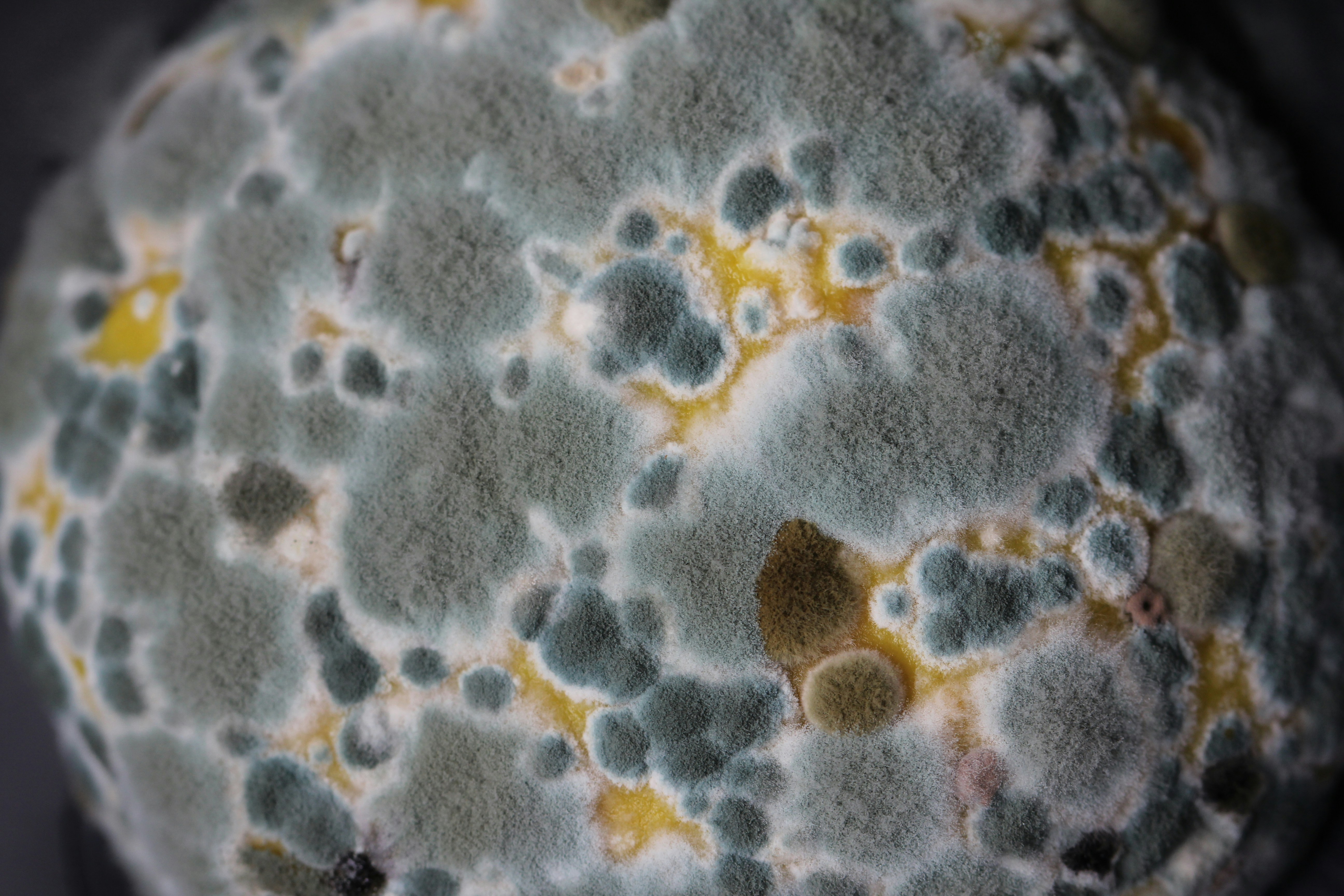
When we talk about CIRS and illness following exposure to a water-damaged building, the conversation can quickly become divided into two quite polarised camps. One says the problem is mold and you need to get out of the environment, due certain protocols, and then you will fully recover. The other says the problem is a sensitised brain and nervous system and you need to retrain your response. I believe from many years of clinical practice, along with my own recovery many years ago, that there is a place for both, and that nuance is needed.
CIRS itself is still a controversial diagnosis, and the proposed mechanisms behind it, including the concept of a persistent cell danger response, are not established medical consensus. At the same time, we know from evidence based research that genuinely water-damaged buildings can affect health. So I don't believe we should dismiss a significant exposure and tell someone that their symptoms are simply their brain overreacting. Sometimes the environment really does need to change in order to allow the brain to heal.
That was part of my own recovery back in 2013. I needed to move after a flood caused mold to grow through the walls and made all residents sick. However, after I moved, I found myself still unwell, and reacting in many places. I did not really feel better once I was out. Instead of getting my life back after leaving the original building, my world was becoming smaller.
This was when I began to understand that although the original environmental problem had changed, my brain and body hadn't necessarily got the message. I was in good treatment to support myself to remove mycotoxins and help my system recover, but I was not doing very well at all. My alarm system had become so good at looking for danger that it was finding it everywhere and constantly predicting it, ending in a loop of severe chronic symptoms. My cells and nervous system were continuing to respond as though I were still in the original environment, perpetuating the very cycle I was trying to escape. I was hyper focused on mold. I was over treating with too many supplements and protocols, I was under nourished from getting scared about food and over controlling it, and I was chronically anxious and preoccupied about chronic illness.
There is an important distinction here too between living in a genuinely water-damaged building and becoming reactive to the normal environmental stimuli we encounter every day. Mold exists in our environment. A building having some mold somewhere does not automatically make it a dangerous building. Once the brain has become highly sensitised, however, the smell, thought or possibility of mold can become enough to trigger the alarm response.
I believe in creating a good-enough environment, rather than spending our lives searching for a perfect one. If there is genuine water damage, deal with it. Remediate appropriately or move if that is what is needed. Support the body after a significant exposure. And, at the same time, work with the brain, mind, body and nervous system so that safety doesn't become dependent on controlling every aspect of the environment.
This is where neuroplasticity, the ability of the brain to heal, change, and repair, became such an important part of recovery for me. It wasn't about pretending the original exposure hadn't happened or convincing myself that symptoms weren't real. I was disabled and my symptoms were entirely real. But I had to change my approach in two ways. First, to teach my brain to stop overreacting to environmental cues that it had learned to associate with danger. Secondly, more deeply, to live in ways that supported a sustainable way of life that allowed my system to access a state of rest and repair. This was a crucial part of my system feeling safe enough to heal. I needed to stop whipping my body into 'healing' from a state of fear, learn to work with my symptom cycle in a way that brought down anxiety and cortisol, and instead learn to support my mind, body, and unique needs in daily life.
Some people report recovering using neuroplastic approaches without needing to move. You can find these stories online and I myself have worked with some of these people. Others, myself included, needed to change their environment. What matters to me is that we don't turn either approach into a rigid rule. We use objective measures where possible like inspections, and our own lab tests, to guide us into a 'safe enough' environment. And, we also tend to the part of our immune and inflammatory response that is under our own influence due to our own stress response.
I think of recovery as working from both directions. We reduce genuine environmental stressors where necessary, while also using our innate capacity for neuroplasticity to help the nervous system and immune system come out of chronic defence. Rather than continually reinforcing the message that the world is dangerous and the body is vulnerable, we begin giving the system repeated experiences of safety, of nourishment, of patience, of meeting our unique needs, and learning more about ourselves and our vulnerabilities for developing these conditions. This is not to get to some 'achieved' state of health. It is to understand often for the first time that health really is biopsychosocialspiritual - meaning health is a combination of these variables
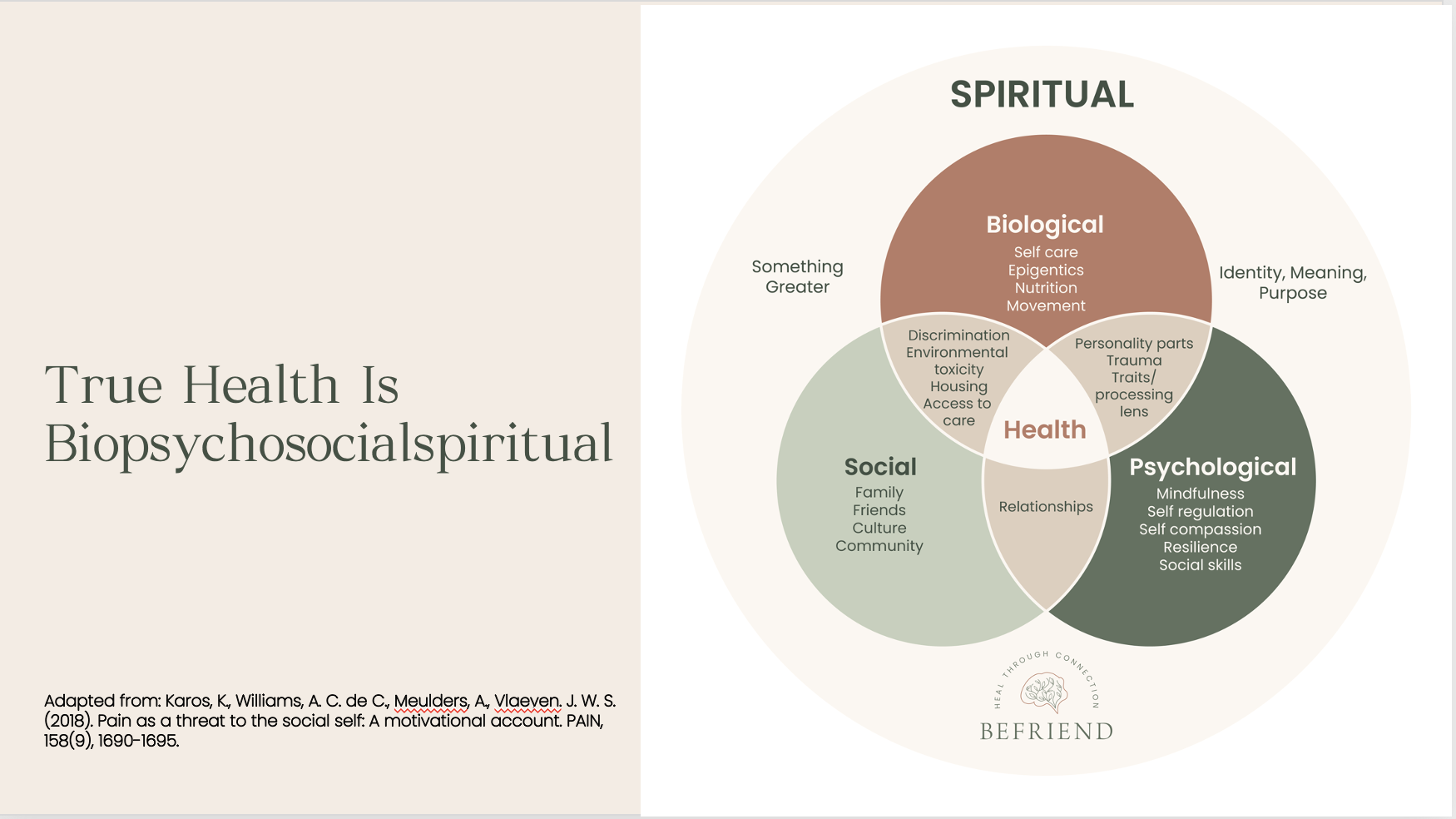
We want to really hold all of those facets of wellbeing with care, a little bit at a time, day by day tending to our mind, body and heart, to allow a dynamic state of health to emerge. Our society is not well! Cultural norms are to hustle, to ignore innate needs, to be sedentary, to conform to cultural ideas of 'success' without staying connected to our own internal rhythms, to pollute our environment, produce food like substances that are not really food that make people seriously unwell, and ignore our own emotional and/or physical needs. This is a recipe for tipping us into chronic stress, where something like an illness, injury, or environmental exposure can send us into a chronic cycle of illness. From my clinical experience working alongside doctors who refer their CIRS patients to me, I see the following components that are really helpful in recovery, and work synergistically to build health:
- Physical activity, not necessarily 'exercise', but movement we learn to lean into and enjoy, including building muscle when well enough. This increases gray matter in key areas of the brain, including the hippocampus, prefrontal cortex, and motor regions. It also stimulates brain-derived neurotrophic factor (BDNF) and enhances cerebral perfusion, supporting neuroplasticity and energy metabolism. If we do not move, we are anxious and depressed because it is a primary need. Every body can move a little, even when bed bound.
- Mindfulness practices that can be done by those not able to focus or meditate. This can be sensory and embodied mindfulness that provide supportive ways to integrate mindfulness into our days. These techniques increase cortical thickness and gray matter in the prefrontal cortex, insula, and anterior cingulate. They also help reduce stress-related shrinkage driven by elevated cortisol. It is also a foundation of trauma healing.
- Quality sleep: Adequate sleep supports glymphatic clearance and neuroregeneration, while chronic sleep deprivation is linked to gray matter shrinkage.
- Nutrient-dense, non vegan diet (especially including DHA, choline, and vitamin B12): These nutrients support myelination, synaptic repair, and mitochondrial function, providing essential building blocks for brain health.
- Social engagement and learning: Engaging socially and mentally stimulates neuroplasticity, particularly in the frontal and temporal lobes, reinforcing neural connections and cognitive resilience. This includes mind-body practices that help switch off the cell danger response and return the body into a rest and repair state
- Sauna therapy when tolerated (it often is not when people are very compromised. They can need to build back minerals and electrolyte balance before tolerating this and may need to do only short times) Regular heat exposure may enhance brain-derived neurotrophic factors (BDNF) and improve cerebral blood flow, supporting gray matter maintenance and neuroregeneration.
From a daily life of including these ingredients, the aim is to create the conditions in which the body can do what it is designed to do: regulate immune activity, process and eliminate unwanted substances, take in nutrients, support the gut, and repair our cells and organs. When we improve our physical, emotional, and social terrain - our health can begin to build.
For me, this distinction was incredibly important. To begin to build health instead of treat sickness. It was a foundation based in hope and looking forward rather than the fixing that came from fear.
Leaving the water-damaged building was part of my recovery. But eventually I realised that physically leaving wasn't enough. My brain and body were still behaving as if I were living there. I had to leave the building, and then I had to teach my system that it was safe to leave it too.
Along the way, I learned that the event of the exposure was a tipping point in my system that was already in a lot of stress, and the deeper healing of those factors has ensured I am well many years later. I can go into buildings and be absolutely fine after leaving even if they are water damaged. My system has the innate flexibility now to be able to let me know if an environment is not healthy, and, there are no lasting effects at all once I leave, I simply bounce back. This is where my clients get to as well.
In terms of physical treatment, my preferred approach for people who have been in genuinely water damaged buildings, is Dr Andrew Heyman's practice in the USA. He has a team of coaches who can help you through treatment, as you work with the brain retraining and mind body components with Befriend. You can contact that clinic here: https://beyondmold.com/experts/dr-andrew-heyman/
.svg)