Becoming part of a blended family can be a huge transition for a child. A new adult enters their home, their routines, their relationship with their other parent, and often their emotional world. Yet children are not always given much help making sense of what this new relationship means. Who is this person to me? Are they now a parent? Do I have to love them? Do they have authority over me? What happens if I don't like them? Is there still enough space for me as an individual, and for my relationship with my parent?
These questions become even more important because a step-parent often arrives alongside loss. Perhaps a parent has died. Perhaps there has been a divorce or separation. Perhaps the child's family has changed dramatically and they are already grieving the life they knew. Even when a separation was necessary or ultimately positive, children may still be adapting to changes in attachment, home, routine, identity and belonging. These are huge themes for children whose brains are easily overwhelmed with a lack of time, space, and support to digest big things that happen in their environment.
This can of course become a wonderful additional relationship in a child's life when a step parent is emotionally mature, regulated, caring, and respectful of the child's personhood. But it can also become another source of distress, particularly when adults assume that children should simply adapt to the new family structure rather than making room for their feelings, needs, loyalties and experiences, or if the step parent has a lot of unhealed emotional content of their own, which is unfortunately very common due to their own prior life experiences.
My teachers Dr Dan Siegel and Tina Payne Bryson describe four fundamental ingredients of secure attachment: children need to feel seen, safe, soothed and, through repeated experiences of these first three, secure. Being seen means that somebody is interested in the child's internal world. Not simply whether they are behaving appropriately, but: What are you feeling? What is this like for you? What do you need? Who are you? The child's emotions and experiences are allowed to exist even when they are inconvenient for the adults around them.
Being safe means being protected from physical harm, but also that the adults a child depends upon do not themselves become a persistent source of fear or threat. Being soothed means that when distress inevitably comes, somebody helps the child through it. They do not have to navigate overwhelming emotions completely alone. Over thousands of these experiences, interpersonal soothing gradually contributes to a child's ability to soothe themselves. And from being reliably seen, safe and soothed comes the fourth S: secure. The child develops an embodied expectation that relationships can be safe, that their feelings matter and that other people can be relied upon. This is part of how we learn who we are, with inherent value (which means we do not need to be perfect, push through feelings, achieve, or otherwise contort ourselves to secure love and connection)
What happens when the opposite occurs? Imagine already losing the family structure you knew and then finding yourself living with an adult who dislikes you, criticises you, excludes you, frightens you, suppresses you emotionally, competes with you for your parent's attention or continually communicates that you are somehow too much, unwanted, or defective. There is the pain of how the step-parent treats you. But there can be another wound underneath it: Where is my parent while this is happening?
A child cannot easily understand the complexity of adult relationships. They may instead conclude: Why aren't they protecting me? Why don't they see what is happening? Why does this person's comfort matter more than mine? Maybe I really am the problem. This can create profound loneliness. The child may technically have adults around them while feeling emotionally alone within their own family.
There is a reason the "wicked stepmother" has survived as a cultural trope for centuries, although of course the reality is not gender-specific. Stepfathers, mothers' boyfriends, fathers' girlfriends and other new parental figures can occupy the same position. And of course there are countless deeply loving step-parents. The problem isn't step-parenting. The problem is what happens when an adult is given power in a child's world without sufficient attunement, emotional maturity, safety or respect for the child's existing attachments and personhood.
Children are extraordinarily adaptive. When they cannot change their environment, they change themselves. A child might become hypervigilant, watching faces, voices and moods for signs of trouble. Another becomes angry and fights back. Another disappears into their bedroom, imagination or inner world. Another becomes exceptionally compliant, perfect, agreeable or helpful. Another might shut off all feelings and just comply and push through.
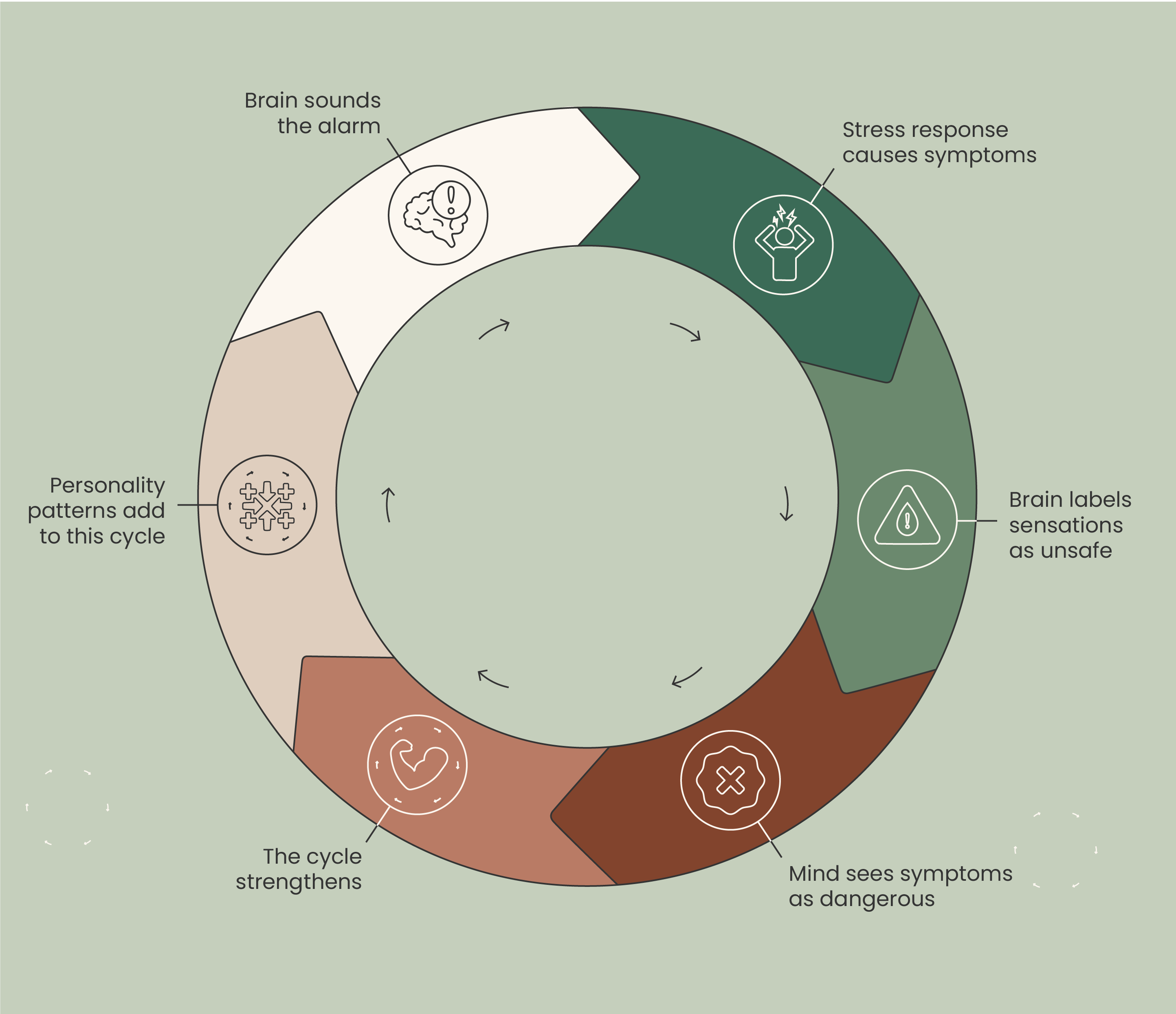
In Befriend language, we might recognise fight, flight, freeze, shutdown and appeasement as valid survival strategies of these adaptive childhood personality patterns. These are intelligent adaptations to an environment in which connection or safety has become unpredictable. But adaptations that help us survive childhood can quietly become the templates through which we live adulthood as a kind of autopilot setting that we do not even notice, because we think it is just 'me'. Don't upset anyone. Don't need too much. Don't trust your feelings. Keep everyone happy. Stay small. Be useful. Scan for danger. Push through. Work everything out before something goes wrong.
And perhaps one of the deepest: There must be something wrong with me. These all matter enormously for self-esteem. Children develop their sense of self partly through how they are reflected in the mirror of their caregivers. If an important adult repeatedly meets vulnerability with contempt, irritation, rejection or indifference, the developing child may internalise that relationship. Eventually, nobody needs to tell us that our needs are inconvenient because we have lost contact with them once they have been unmet for so long, many of us do not even know what our needs are and if they are safe to have. Nobody needs to dismiss our feelings because we automatically dismiss them. Nobody needs to demand that we push through exhaustion because we have learned to override ourselves. Nobody needs to abandon us because we learned to abandon ourselves first.
This isn't simply psychological. Research on adverse childhood experiences has found associations between prolonged childhood adversity and changes in developing stress-response, neuroendocrine and immune systems. The CDC describes toxic stress as capable of affecting brain development, the immune system and stress-response systems, while research into the biological embedding of childhood adversity has examined alterations in HPA-axis regulation, inflammatory processes and other physiological systems.
This does not mean that having a difficult childhood condemns somebody to chronic illness. Biology is not destiny. Nor can we say that childhood adversity directly caused an individual's particular condition. But it does help us understand why developmental adversity can be one contributor to vulnerability later in life. Research increasingly recognises disrupted caregiving and unpredictable environments as biologically meaningful forms of childhood adversity, with potential effects on stress and inflammatory physiology across development. If our developing system repeatedly learned that it needed to mobilise, monitor, suppress, appease or disappear in order to remain safe and connected, those predictions can become deeply practised.
For some of us, emotional or physical collapse later in life becomes the point at which these old ways of surviving can no longer remain invisible. And painful though that can be, it can also become an invitation to do something radically different - reconnect to the parts of our expression that we did not have access to, find out what our unique needs are, learn to feel in our bodies and as full selves (not just the parts that achieve for esteem or earn us connection)
There is a very personal reason this subject matters to me. I had what I can only describe as an evil stepmother as a child and only got rid of her a couple of years ago when she divorced my father and took all his money, as I knew she would. I knew what it felt like to be the little girl who was not welcomed, delighted in or treated with kindness.
Many, many years later, in 2019, I became a stepmother myself. It has been one of the greatest joys and privileges of my life. From the beginning, I never wanted to replace my stepdaughter's mother or assume a maternal position that wasn't mine. I wanted to be something quite distinct: a loving, supportive step-parent and friend. I wanted to know her. Not the child I thought she should be. Not the relationship I imagined we should have. Her.
I wanted to hold her in mind as a completely separate human being and allow her to show me how she wanted to be related to. I didn't want authority to be the foundation of our relationship. I wanted relationship to be the foundation of our relationship. That meant respecting her voice. Giving her room. Being curious about her inner world. Allowing closeness to grow rather than demanding it because an adult relationship had changed her family structure. She is a woman now, and it remains an enormous honour to know her.
And along the way, in this deep delight of a girl, young woman and now woman, something unexpected happened for me, too. The little girl in me who had been so hated and hurt by her own stepmother, and her mothers boyfriend, got to discover what another kind of stepmother could have looked like. I got to become someone who would have felt fun and safe to young me. There has been something so healing about that. To see Kaila my step daughter thrive under the love of all adults around her, to give her everything I did not get because she deserves it, because she exists.
I am deeply grateful to my stepdaughter for welcoming me, being open to me and teaching me so much about love and nurture in ways I did not always get to experience in my own childhood. I do not need to get revenge, or anything bad to happen to my step mother. I needed to grieve, heal, feel my anger and reclaim the power I did not have back then, to empower who I have become for myself and for others.
I share this personal piece because I want you to know that it is never too late to grow into someone you did not have. So much of healing childhood adversity isn't about endlessly looking backwards. It is about recognising where yesterday is still happening today.
How were you related to when you were vulnerable?
And how do you relate to yourself when you are vulnerable now?
What happened when you had needs, physical or emotional?
And what happens inside you when you have needs today?
What happened when you were frightened, angry, sad, tired, overwhelmed or different?
And whose voice meets those parts of you now?
Because unfortunately, the way other people treated us can become the way we unconsciously treat ourselves. Healing gives us an opportunity to interrupt that inheritance. Is it easy and simple? No. We will tend to have many turns of the wheel of situations to learn from, grow, and meet again in slightly new ways until we learn enough to really deeply take care of ourselves mentally, emotionally, physically and spiritually.
We can learn to see ourselves rather than dismiss ourselves. To soothe rather than shame. To create safety without trying to control everything. To listen to our bodies rather than continually override them or neglect them. To recognise our needs without immediately judging them. To allow ourselves dignity without first earning it through productivity, compliance or usefulness.
What we practise internally begins to change what we offer relationally, and that I think is part of our collective healing. We become safer partners, parents, step-parents, friends, leaders and human beings. We stop confusing authority with connection. We stop demanding suppression in the name of good behaviour. We become more interested in understanding than controlling.
Perhaps this is one of the deepest possibilities within healing: not simply feeling better ourselves, but ending something that has travelled through families and relationships for far too long. We get to become the adult we needed, to offer other people what we learned to offer ourselves.
And underneath all of it is something remarkably simple: recognising the innate dignity of another human being; including the one inside our own skin. I think this is why in my own work, people tend to heal very deeply. Because that is the mirror I see you all in. Not pathology of your symptoms or labels, but a mirror of how your adaptations made sense, and, that they really are not all of you. You always have the ability when basic needs are met, to grow, evolve, and thrive - when willing to give it a go in the radical responsibility of adulthood. We do not choose the hand we were dealt, and, we get to awaken to the understanding that we can choose how to play that hand. I believe that is where both people and our planet have the greatest chance to thrive.
.svg)